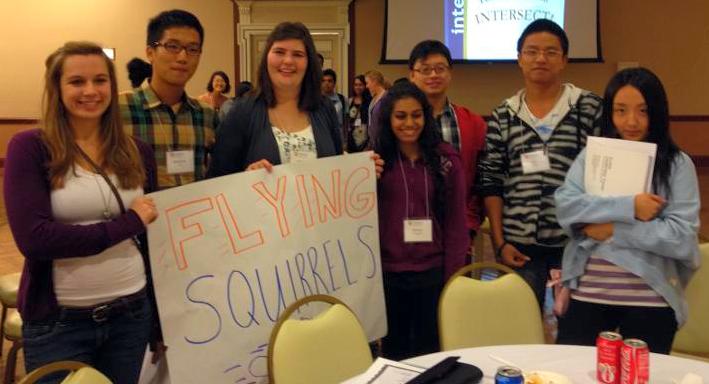
IntersectSeptember 8th, 2012
After making the decision to enroll in Intersect, I expected to learn how to better communicate and work with groups. I anticipated learning about different ways people listen and how this might have an effect on being a leader or a follower in a group setting.
With the focus of Intersect being interpersonal development in a group setting, my main take-away was that I am a discerning listener. A discerning listener works to eliminate distractions and focus on gathering complete information. A good environment for a discerning listener would be a quiet place where everyone is focused on the speaker’s message or the task at hand. I was able to put my awareness of my listening style to use when the groups were asked to make a shopping list for an unidentified construction project. I was the member of my group chosen to shop for the materials. There were many distractions while I was shopping due to the fact that eleven other people were shopping from the same stock pile. With my new knowledge of my listening style, I was more aware that I needed to focus on my task instead of getting distracting with what the other people were doing. My team had created a shopping list and it was my responsibility to stick to it.
While reflecting back on our group project, we learned about dimensions of effective teams. These dimensions included: clear group goals; effective, two-way communication; distributed participation and leadership; appropriate decision-making procedures that can be flexible to match the needs of the situation; approximately equal power and influence; encouraging conflicts and different perspectives; high group cohesion; high problem-solving adequacy; and high interpersonal effectiveness. When the group debriefed after the project was complete, I realized that a team made up of many different backgrounds is a great way to reach the set goal. Although everyone may have a different way of realizing the end goal, when ideas were put together there was a little bit of everyone in the end result. I learned that it is important not to judge someone right away. Different people excel in different environments and through different methods.
The specific skills and attributes that Intersect focused on were relationship building, communication skills, ethical practices, and team development. I have started applying these skills and attributes to my groups and daily interactions. My listening style requires a quit environment. I have built stronger relationships and am a better communicator because of my personal awareness. I know I need to be in a secluded place when talking with new acquaintances either face-to-face or via phone. It is in my best interest to ask questions to clarify something that I do not understand or that I find interesting. Appling what I have learned to team development, I find myself using my discerning listening to benefit my team. When others are throwing out dozens of ideas, I sit quietly, listen, take notes, and ask questions to clarify. This has already benefited a large group project that has just begun in my Community Recreation Planning class. I look forward to finding new ways in which my discerning listening style can have a utilitarian benefit.
While learning so much about relationship building, communication skills, and team development, I realize that I still need to work on ethical practices. I must be sure to incorporate my values into every decision I make. This will ensure that I have a solid base for when I come across a very tough decision that requires a full analysis of my core and supporting values.
Finally, I believe participating in this program connected to my Learning Goal 1) to develop my interpersonal skills by practicing small group communications in my role as President for the Sport, Tourism, and Recreation Association (STAR) during the 2012-2013 school year. By gaining a deeper understanding of interpersonal skills as it relates to small groups, I can begin to utilize my discerning listening style during STAR events.